What property owners need to know about taxation, regulations and compliance
Saturday, January 3, 2026,
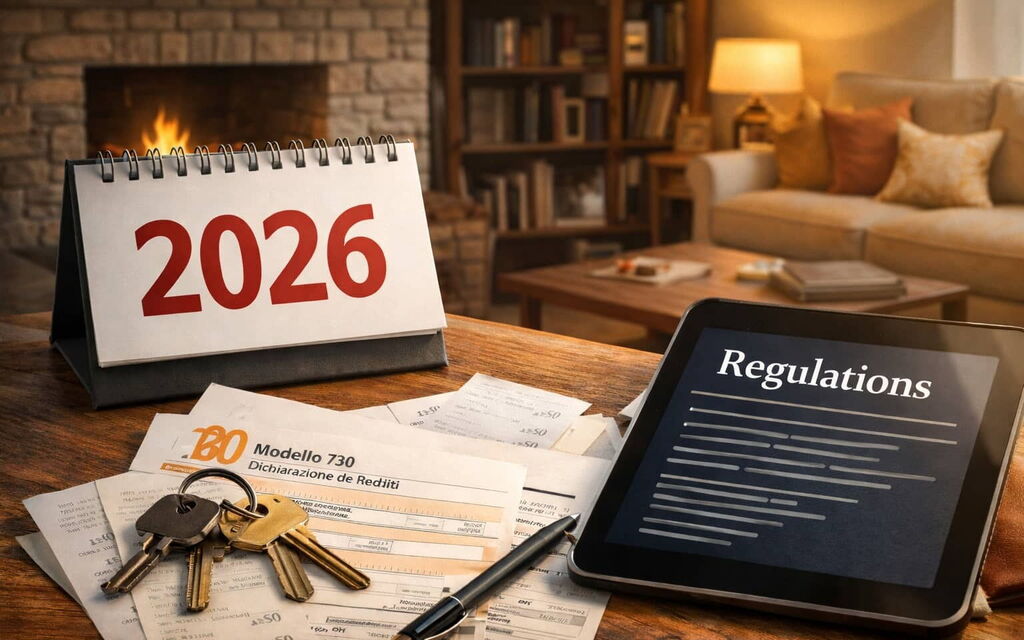
Short-term rentals in Italy: tax updates and legal requirements for 2026
Over the past few years, the regulatory and tax framework for short-term rentals in Italy has become increasingly complex and, at times, difficult for property owners to interpret. Following the final approval of the latest regulations, we believe it is useful to provide some clarity by summarising the main tax updates and recalling the legal obligations already in force, using a practical and straightforward approach.This article is intended for informational purposes only and does not replace the advice of your accountant or trusted consultant, with whom it is always essential to consult before making any operational decisions.
Taxation of short-term rentals in Italy: what changes in 2026
The flat tax regime (cedolare secca) continues to apply to short-term rentals, but with different rates depending on the number of properties used for this purpose. Specifically, the rate remains at 21% for the first property, while it increases to 26% from the second property.
One of the most relevant changes concerns the threshold at which a presumption of business activity applies. From the third property used for short-term rentals, the activity is generally considered to be carried out in an entrepreneurial form. This threshold has therefore been lowered compared to the past.
Where a presumption of business activity applies, VAT registration becomes mandatory, with the possibility to choose between the flat-rate tax regime, if eligibility requirements are met, or the ordinary tax regime.
Before making any fiscal decisions or changing the way a property is managed, it is always advisable to consult your accountant, taking into account your overall income, the number of properties owned and your medium- to long-term objectives.
Legal requirements for short-term rentals in Italy
In addition to tax matters, it is important to remember that short-term rental activity involves a number of mandatory legal requirements, which are already in force and often subject to inspections.
Each property used for tourist rentals must be registered in the National Accommodation Database and assigned an identification code (CIN or CIR). This code must be included in all online listings and promotional materials, and must also be displayed outside the property, in accordance with local regulations.
If the rental activity is carried out in an entrepreneurial form, or when the legal requirements are met, the SCIA filing with the local municipality is mandatory and must be completed before starting the activity.
Particular attention should also be paid to property safety requirements. Mandatory equipment includes properly installed and regularly serviced fire extinguishers, smoke detectors and, where required, carbon monoxide detectors, as well as the general compliance of installations and safety systems.
Operational obligations also include the communication of guests’ details to the competent authorities (for example via the Alloggiati Web system), the correct management of tourist tax where it is not automatically collected by booking platforms, and compliance with regional and local regulations, which may vary significantly from one area to another.
A conscious and sustainable approach to short-term rentals
In light of an increasingly structured regulatory environment, we believe it is essential to avoid rushed decisions and adopt a conscious and sustainable approach to managing properties used for short-term rentals.
Each situation is different and requires a personalised assessment, taking into account not only tax aspects but also the owner’s objectives, the characteristics of the property and the reference market.
Tuscanhouses support for property owners
Tuscanhouses supports property owners by providing informational and operational assistance, helping them navigate regulations, taxation and property management.
For those wishing to explore their individual situation or assess the most suitable solutions, it is possible to request an initial, no-obligation consultation. Reach us at elisa@tuscanhouses.com________________________________________
Article updated in accordance with current regulations, January 2026.
What property owners need to know about taxation, regulations and compliance: Read More
Italian cuisine, UNESCO Intangible Cultural Heritage: a journey that begins at the table
Wednesday, December 17, 2025,

A recognition that celebrates the Italian table as an experience of conviviality, tradition, and discovery for those traveling in Italy
One of Italy’s greatest beauties is the table.This is where the journey truly begins: with aromas drifting from the kitchen, meals shared without haste, recipes told more than explained. This is why we are proud to say that Italian cuisine is now recognized as UNESCO Intangible Cultural Heritage of Humanity.A recognition that speaks directly to our guests: staying in Italy means entering a country where cooking and eating are daily rituals — acts of hospitality and authentic ways of being together.It is the first time UNESCO has recognized a culinary tradition in its entirety. Not a single iconic recipe, not a celebrated product, not a specific cooking technique. But an entire cultural system made of living practices, shared knowledge, inherited gestures, and social rituals.In Italy, preparing food is never an isolated act: it is care, attention, and encounter. It is a language that connects generations and changes from one home to another, from one village to the next.A mosaic of landscapes, flavors, and traditionsIn Italy, all it takes is moving to the next hillside for the pantry to change, shaped by soil and microclimate. This diversity of landscapes has fostered extraordinary agricultural biodiversity. Take the olive tree, for example: Italy is home to more than five hundred different olive cultivars. Each olive oil tells the story of a place, a light, a season.In the same way, Italy boasts more than 300 types of pasta, not counting regional and family variations. Yet the most fascinating detail is that almost every family has its own way of doing things: broths, fillings, sauces, even the way the table is set on festive days.This is why Italian cuisine is never static. It lives in small differences, repeated gestures, and traditions that evolve without ever losing their soul. There are no sacred recipes and no untouchable ingredients — only a remarkable ability to adapt, reinterpret, and make every dish feel like home. Italian cuisine is a constantly evolving mosaic, shaped by exchange, influence, memory, and creativity.Traveling to Italy to learn how to cookA stay in Italy can also become an opportunity to truly connect with its cuisine, by joining a cooking class or a lesson dedicated to regional traditions.In Tuscany, for example, cooking means getting your hands into the dough to prepare tordelli, discovering ancient recipes like scarpaccia, tasting torta di pepe, or learning the perfect simplicity of pappa al pomodoro, where just a few ingredients tell a centuries-old story.Learning how to cook a local dish is not just about following a recipe: it is about understanding a territory, its seasons, and its way of gathering around the table. It is about taking a piece of the journey home, to relive long after returning.An invitation to discover Italy through foodVisiting Italy also means this: sitting at the table, sharing a meal, listening to a story.Perhaps this is the most authentic way to understand the country — and the deepest meaning of the UNESCO recognition: Italian cuisine is not just something to taste, but an experience to be lived.Experiencing Italy also means this: taking your time, sharing a meal, and feeling at home. Our homes are chosen to let you live these moments in the most authentic way. Discover them on Tuscanhouses.com.
Italian cuisine, UNESCO Intangible Cultural Heritage: a journey that begins at the table: Read More
Christmas in Lucca: markets, lights and magic in the historic centre
Friday, December 5, 2025,

Charming markets, musical events, family activities… Lucca becomes even more intimate and welcoming during the holidays.
Visiting Lucca at Christmas means discovering a city that transforms: the Walls light up, squares turn into festive stages and the alleys are filled with the scent of spices, hot chocolate and tradition.If you’re planning a holiday in Tuscany during the festive season, Lucca’s Christmas Markets are simply a must.The sparkling heart: the French Christmas VillageYour first stop is Piazza Napoleone, where the famous French Christmas Village comes to life until 28 January 2026.A small Provençal world made of wooden chalets, handcrafted textiles, lavender, Parisian perfumes and irresistible treats:over 80 varieties of French cheeseswines from the finest regionsBreton biscuits, macarons and artisanal chocolatefreshly baked baguettes and croissantsThe Village is open every day (Monday 15:00–20:00, Tuesday to Sunday 9:30–20:00).Christmas in San Frediano: creativity and Lucchese charmFrom 6 December 2025 to 6 January 2026, the beautiful Piazza San Frediano hosts an intimate, authentic Christmas market where local artisans and makers present unique pieces, gift ideas and sweet holiday treats.On two special dates – 7 and 13 December – the square comes alive with mimes, clowns and gospel music filling the air with festive energy.Open daily 10:00–19:00, closed on 25 and 31 December.Meraki Market, Arts & Crafts and Pure Chocolate: a city-wide ChristmasThroughout December, Lucca hosts a series of themed markets scattered among its alleys, loggias and monumental squares:Meraki Christmas Market at Loggia di Palazzo Sani: 6, 7, 8, 13, 14, 20, 21, 22, 23 DecemberArts & Crafts – Xmas Edition in Piazza San Giusto: 6, 7, 8, 13, 14, 15 DecemberPure Chocolate in Piazza Anfiteatro: until 8 December, with workshops for adults and kidsAnd for vintage lovers, the Antiques Market (20–21 December) is unmissable: the second oldest in Italy, set among hidden courtyards and timeless artisan shops.Artist lights and installations: picture-perfect cornersA Christmas visit to Lucca wouldn’t be complete without admiring the light installations that decorate the city’s landmarks.From Palazzo Ducale to Piazza San Michele, from the Cathedral to the Anfiteatro, the city becomes a luminous canvas.Some of the most enchanting installations include:a giant walk-through Christmas bauble in Piazza NapoleoneEmiliana Martinelli’s starry sky in Piazza del Giglioa forest of lights in Piazza della CattedraleLumière Bohème by Francesco Zavattari in Piazza Cittadellathe nativity scene and Bark for Christmas by Michel Bouquillon in Piazza San Michele and Piazza AnfiteatroEvery corner becomes the perfect backdrop for a holiday selfie.For the little ones… and not only!Of course, Santa’s Village couldn’t be missing.Hidden inside one of the courtyards in the historic centre, Santa’s Village is a delightful surprise for children, with elves, games and fairytale atmospheres. A must for families visiting Lucca.Ice skating on the Walls: the most magical experienceOne of the most beloved Christmas attractions in Lucca is the skating rink set on the Renaissance Walls, offering panoramic views of the illuminated city.Perfect for families, groups of friends and couples looking for a romantic moment.Christmas Markets beyond Lucca: festive villages nearbyIf you’d like to explore the surroundings, there are many events worth visiting:Christmas in Sant’Angelo – 6, 7 and 8 December: market, skating rink and traditional street foodSant’Anna Christmas Market – 14 DecemberChristmas Concerts in Lucca: music for every tasteThroughout the festive season the city hosts dozens of concerts, ranging from baroque music to gospel and performances by local choirs.From 5 December to 4 January, churches, museums and auditoriums welcome a rich programme: early music, gospel, choirs, piano recitals, bagpipes, organ concerts and special events such as the Christmas Mass at Convento dell’Angelo.Why visit Lucca at ChristmasFor the markets filled with crafts and sweet treats.For the lights that turn squares and churches into works of art.For the music, family-friendly events and the beauty of a city that becomes even more intimate during the holidays.And for the chance to experience all of this while staying in one of TuscanHouses’ beautiful properties across Lucca, Versilia, Pisa, Pistoia and their enchanting villages — the perfect home base for an unforgettable Tuscan Christmas.The illuminated Walls are waiting for you: choose your ideal TuscanHouses apartment for a magical Christmas in Tuscany.
Christmas in Lucca: markets, lights and magic in the historic centre: Read More