The real issue isn't tourism — it's trust · Two tools, two very different weights · The real fix: less bureaucracy, real bargaining power for owners · Our position hasn't changed
Friday, September 18, 2026,
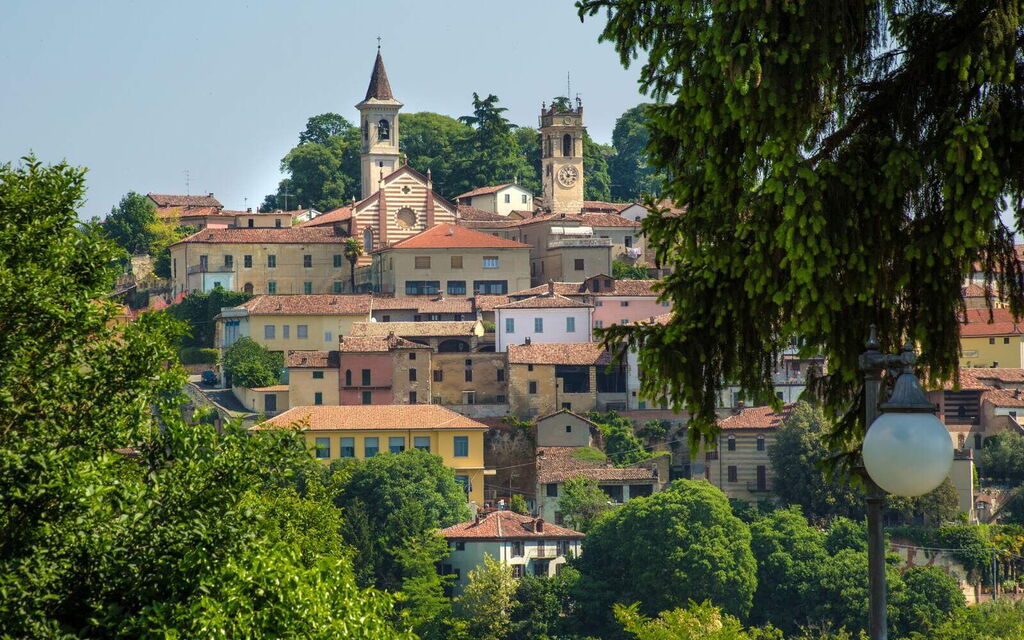
The new EU Regulation confirms what we've been saying for years: without less bureaucracy and real protection for owners, restricting short-term rentals won't create a single new home
The European Commission has unveiled the Affordable Housing Act, the latest piece of the broader European Affordable Housing Plan launched on December 16, 2025, which has already mobilised more than €43 billion in EU funding for housing. The Act has two parts: a proposed EU Regulation, which gives local authorities a common framework for demonstrating when an area is under "housing stress" and for justifying any measures in a proportionate, transparent way; and a Commission Recommendation, focused instead on accelerating housing supply through faster permitting, better use of existing buildings, and more social housing. And here's the line that matters most — straight from the Commission itself, the kind of statement we at Tuscanhouses have been making for years:Restrictions alone cannot solve housing shortages.That's not our spin. It's written directly on the Act's official page. Local authorities remain free to regulate short-term rentals, secondary homes or vacant dwellings — but only if the measures are evidence-based, necessary and targeted, not blanket restrictions imposed because short-term rentals make an easy scapegoat.Even the European Parliament, in the housing crisis report adopted by its Housing Committee on February 9, 2026, didn't call for a ban. It called for short-term rental legislation that balances tourism with housing affordability — an explicit acknowledgment that this is more complex than a simple "tourists vs. residents" fight.The real issue isn't tourism — it's trustThe EU text acknowledges that housing pressure is concentrated in cities, metropolitan areas, islands and tourist destinations, and that some non-primary uses of housing can make it harder to find a stable long-term home. True. But the question too few people are asking is: why do property owners choose short-term rentals over long-term leases in the first place?For anyone who manages properties day to day, the answer is simple: risk. A landlord who signs a long-term lease and ends up with a tenant who stops paying can spend years and thousands of euros trying to reclaim their own property. With short-term rentals, that risk almost disappears entirely. This isn't an ideological rejection of long-term rentals — it's a rational response to a system that, in practice, protects non-paying tenants more than it protects owners who've invested their savings in a property.Until institutions rebalance that relationship, restricting short-term rentals won't move a single home into the stable residential market. It will simply push those properties out of the market altogether — or into unregulated, undeclared renting.This problem weighs more heavily in Italy than in most of the EU. Italy is among the countries where eviction for non-payment takes comparatively longer: even in straightforward cases it's a matter of months, and if the tenant contests or requests extensions, the process can drag on for years. This is why, when we talk about "trust in institutions," the Italian — and Tuscan — case isn't a footnote. It's the heart of the problem.Two tools, two very different weightsIt's worth clarifying a technical point that often gets lost: the proposed Regulation and the Recommendation don't carry the same legal force. The Regulation sets a common methodological standard — how to measure "housing stress," how to justify measures — and once adopted, it will be binding on Member States. The Recommendation, on the other hand — the part dedicated to streamlining permits and cutting red tape on the supply side — is not binding: it's sound advice the EU is offering to States and municipalities, which remain free to apply it, or to ignore it.In other words: Europe can suggest simplification, but it can't force anyone to actually simplify. It will be up to individual municipalities and regions to decide whether to genuinely follow that path — or to give in to the easier, more politically saleable temptation of punitive measures on short-term rentals, which the binding Regulation still allows, as long as they're "justified and proportionate."The real fix: less bureaucracy, real bargaining power for ownersThe Recommendation that accompanies the Regulation partly points in the right direction: faster permits, fewer administrative burdens, better use of the existing building stock. Those are exactly the right ingredients — simplification, not prohibition. But since it isn't binding, its fate depends entirely on local political will.But to truly turn the housing emergency into an opportunity, one decisive piece is still missing: legal tools that give owners real certainty they can reclaim their property quickly when a tenant stops paying. This isn't about weakening protections for honest tenants — it's about no longer treating non-payment as a risk the owner must simply absorb indefinitely.If authorities legislated in this direction — faster evictions for proven non-payment, less procedural red tape, predictable timelines — many owners who currently choose short-term rentals specifically to avoid this risk would start seriously considering long-term leases again. The housing problem would stop being a constraint and start becoming an opportunity.Our position hasn't changedThe EU itself admits that restrictions alone aren't enough. We'd add one more step: the real lever isn't limiting short-term rentals — it's restoring trust for those who would consider renting long-term. Less bureaucracy, real protection for owners against non-payment: that's the reform that's actually needed, not another crackdown on tourism.Own a property and want it to generate income without the non-payment risk? Tuscanhouses handles every aspect of short-term rental management for you — from guest sourcing to maintenance — so you get a stable return without the headaches. Get in touch for a free consultation.
CIN in Tuscany: A Practical Guide for Existing and New Holiday Rentals
Thursday, August 6, 2026,
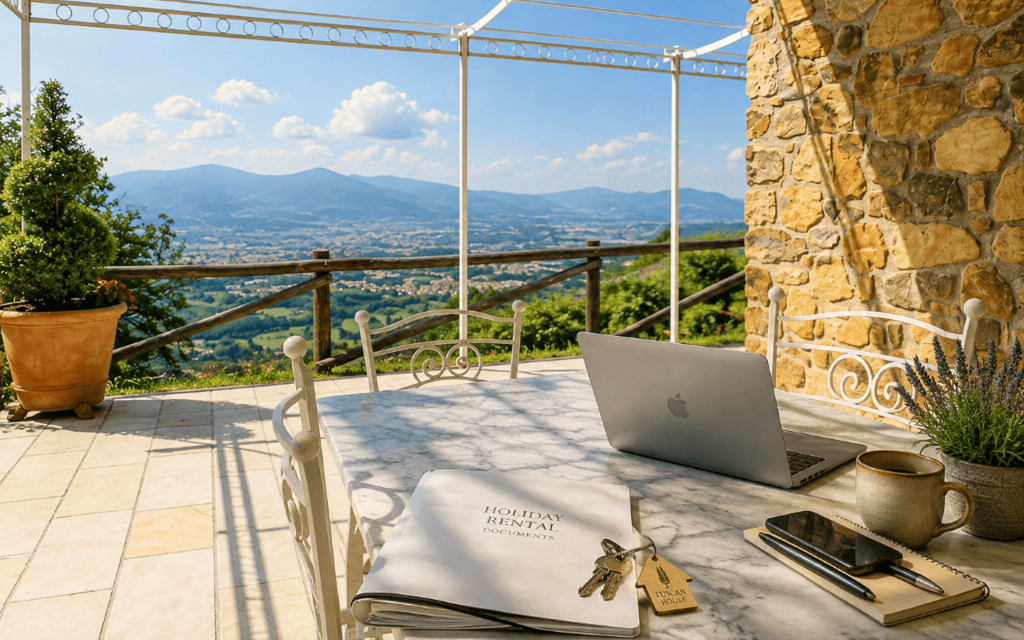
The CIN is mandatory for all holiday rentals in Italy, but the application process differs depending on whether your property is already registered or you're opening a new holiday rental. This guide explains each step in a simple and practical way.
If you own a holiday rental in Tuscany, you've probably asked yourself one simple question:"Do I need to apply for the CIN? And what if I'm opening a new holiday rental?"The answer is straightforward: yes, the CIN is mandatory, but the procedure depends on whether your property is already registered or you're starting a new holiday rental today.This guide explains exactly what you need to do, without unnecessary legal jargon.Updated: August 2026This guide refers to the transitional implementation phase established by Article 60 of Tuscany Regional Law No. 61/2024, as amended by Regional Law No. 9/2026.Please note: this guide applies only to non-business holiday rentals. Different rules apply to B&Bs, guesthouses, agriturismi, hotels and other accommodation businesses.Is the CIN Mandatory?Yes.The National Identification Code (CIN) is mandatory for all holiday rentals in Italy, including privately managed, non-business holiday rentals.Your CIN must be:• displayed outside the property;• included on Airbnb, Booking.com, Vrbo and any other booking platform;• shown on your own website and any promotional material.Do You Already Have an Active Holiday Rental?If your property is already registered and you already have a Regional Identification Code (CIR), obtaining the CIN is relatively straightforward.Unless you need to report changes to your activity, you do not need to submit a new notification through SUAP.Instead, simply:• log into the National Accommodation Database (BDSR) using your SPID or Electronic Identity Card;• verify your property's information;• confirm the required declarations;• download your CIN.Once issued, the CIN must be displayed outside the property and included in all online listings.Opening a New Holiday Rental?The procedure is slightly different for new non-business holiday rentals.During the current transitional phase in Tuscany, three steps are required.Step 1 – Notify SUAPYou must electronically notify the competent SUAP office through the STAR portal before starting your activity.This notification is mandatory by law.Step 2 – Complete the Regional RegistrationDuring the transitional period, Tuscany also requires owners to complete the regional self-registration process.This procedure generates the Regional Identification Code (CIR), which is still required before applying for the CIN.Step 3 – Apply for Your CINOnce your CIR has been issued, you can access the National Accommodation Database (BDSR) using your SPID or Electronic Identity Card and request your CIN.Why Are Two Procedures Required?This is probably the question we receive most often.The answer is simple: Tuscany is currently in a transitional phase.For this reason, new holiday rentals must complete both the SUAP notification and the regional registration before applying for the CIN.At a GlanceYour SituationWhat You Need to DoYou already have a CIRApply for the CIN through the BDSRYou're opening a new holiday rentalSUAP → Regional Registration → CIR → CINSafety RequirementsWhen applying for the CIN, you must declare that your property complies with the applicable safety regulations.Before submitting your application, make sure your property meets the required standards, including, where applicable:• fire extinguishers;• carbon monoxide detectors;• gas detectors;• compliant utility systems.Frequently Asked QuestionsI already have a CIR. Do I also need a CIN?Yes. The CIN is mandatory for existing holiday rentals as well.Does the CIN replace the CIR?No. During Tuscany's current transitional phase, the CIR is still required for new holiday rentals.Where do I apply for the CIN?Applications are submitted through the National Accommodation Database (BDSR) managed by the Italian Ministry of Tourism.Can I advertise my property without a CIN?No. The CIN must appear on Airbnb, Booking.com and all other booking platforms, as well as on any promotional material.Need Some Help?Regulations change frequently, and understanding the correct procedure isn't always easy.For more than 15 years, TuscanHouses has been helping property owners successfully manage holiday rentals throughout Tuscany, including administrative requirements and regulatory compliance.If you'd like assistance with your holiday rental or would simply like to check that everything is in order, feel free to contact us at info@tuscanhouses.com. We'll be happy to help.
CIN in Tuscany: A Practical Guide for Existing and New Holiday Rentals: Read More
From the Florence Rulings to the Urban Planning Trap: When Property Rights Become a Gamble
Wednesday, April 22, 2026,
Short-Term Rentals in Italy: The Struggle of Historic Centers from Naples to Lucca
The climate surrounding short-term rentals has become a perfect storm of bureaucracy and ideology. While property owners are still trying to make sense of the Florence ruling — a first-instance decision stating that even owning a single apartment could mean being considered a business operator — Naples has now played its trump card: the Urban Planning Amendment to the PUC.
This is no longer just bar talk, but a precise administrative measure: City Council Resolution No. 637 of 19 December 2025, published in the Official Bulletin of the Campania Region (BURC No. 6 of 2 February 2026). The municipality has decided that, within the UNESCO Historic Centre, residential use must remain at 70% for each individual building.
Translated: if your building has 10 apartments and 3 already have active CIN codes, you are out. It does not matter whether that home represents your life savings or your family’s only source of income. If your neighbours were quicker to obtain the code, your property rights are effectively frozen by a statistical calculation.
The real bureaucratic “masterstroke” is the obligation to change the property’s use classification to “A/tourist”. The municipality wants the property removed from the residential category altogether. It is a move that ignores the flexibility inherent in private ownership and will force small owners into unsustainable technical costs, paradoxically benefiting only large players with the capital to handle these procedures.
We have reached a lottery of property rights.
And while people debate percentages, identification codes and new restrictions, one question naturally arises: has anyone really looked at what it is like to live in historic city centres? The City of Naples says it wants to “guarantee the right to housing.” A beautiful phrase — if it did not ignore reality. Our historic centres are jewels, but they are inconvenient places to live.
Parking is virtually non-existent.
The streets are so narrow that sunlight barely reaches them.
There are fourth-floor apartments with staircases that feel like mountain climbs and no room whatsoever for a lift.
A family with children and shopping bags, in 2026, says no. If short-term rentals are removed from these properties, residents will not suddenly come flooding back: what we will get instead are empty buildings and decay. Short-term rentals have enabled many owners to renovate homes that were literally falling apart; without that income, who will pay for structural repairs and façade restoration?
Small owners are being targeted instead of addressing the real issues: the lack of efficient public transport and the absence of modern neighbourhoods that could offer a genuine alternative to the historic centre. Because between Naples and Florence the debate is heated, but reality is much more concrete. And in Lucca, we know this very well.
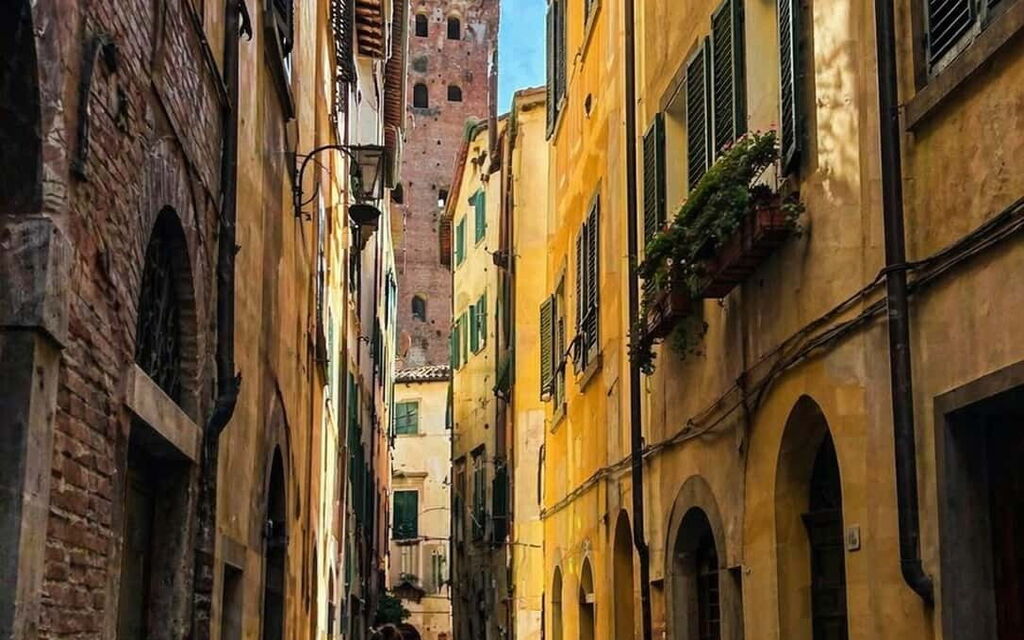
Living in Lucca’s historic centre today means living on Via Fillungo and not being able to park anywhere near your home. It means driving around for 20 minutes looking for a space. It means living on Via della Fratta, perhaps on the fourth floor without a lift, carring a stroller and a child in your arms. Or on Via San Paolino, climbing 49 steps with your groceries on your back. It means not even being able to leave a bicycle in the entrance hall because there is simply no room in buildings designed in another era.
And this is where the debate on short-term rentals collides with reality.
A tourist accepts all this for a few days because it is part of the experience. The idea that limiting short-term rentals will automatically bring residents back into historic centres is an oversimplification that does not hold up. The truth is that we have become accustomed to comfort, and we want those comforts all year round.
In the meantime, small property owners are increasingly being pushed into a business model that is not theirs. Between CIN requirements, technical obligations and rising costs, managing even a single property becomes unsustainable. And when management becomes too burdensome, people sell. But it is not residents who buy: it is those with deep enough pockets to absorb the impact of bureaucracy.
The result is paradoxical: the stated goal is to protect housing, yet the real risk is to empty properties that were restored precisely thanks to tourism. Without that income, very few people would invest in repairing roofs or restoring façades.
The question remains open: does it really make sense to apply the same approach to places like Lucca, where the issue is not only price, but the very liveability of the properties themselves? The real risk is not that residents will fail to return. The real risk is much simpler: shuttered homes, less maintenance, and declining value.
At Tuscanhouses, we walk these streets every day: from Via Fillungo to Via San Paolino, we know the strain of those staircases, but also the immense value of every single restored roof. We must not let bureaucracy turn out the lights in the historic centre.
Follow Tuscanhouses to stay updated on regulations and if you need help with your property contact us.
This is no longer just bar talk, but a precise administrative measure: City Council Resolution No. 637 of 19 December 2025, published in the Official Bulletin of the Campania Region (BURC No. 6 of 2 February 2026). The municipality has decided that, within the UNESCO Historic Centre, residential use must remain at 70% for each individual building.
Translated: if your building has 10 apartments and 3 already have active CIN codes, you are out. It does not matter whether that home represents your life savings or your family’s only source of income. If your neighbours were quicker to obtain the code, your property rights are effectively frozen by a statistical calculation.
The real bureaucratic “masterstroke” is the obligation to change the property’s use classification to “A/tourist”. The municipality wants the property removed from the residential category altogether. It is a move that ignores the flexibility inherent in private ownership and will force small owners into unsustainable technical costs, paradoxically benefiting only large players with the capital to handle these procedures.
We have reached a lottery of property rights.
And while people debate percentages, identification codes and new restrictions, one question naturally arises: has anyone really looked at what it is like to live in historic city centres? The City of Naples says it wants to “guarantee the right to housing.” A beautiful phrase — if it did not ignore reality. Our historic centres are jewels, but they are inconvenient places to live.
Parking is virtually non-existent.
The streets are so narrow that sunlight barely reaches them.
There are fourth-floor apartments with staircases that feel like mountain climbs and no room whatsoever for a lift.
A family with children and shopping bags, in 2026, says no. If short-term rentals are removed from these properties, residents will not suddenly come flooding back: what we will get instead are empty buildings and decay. Short-term rentals have enabled many owners to renovate homes that were literally falling apart; without that income, who will pay for structural repairs and façade restoration?
Small owners are being targeted instead of addressing the real issues: the lack of efficient public transport and the absence of modern neighbourhoods that could offer a genuine alternative to the historic centre. Because between Naples and Florence the debate is heated, but reality is much more concrete. And in Lucca, we know this very well.
Living in Lucca’s historic centre today means living on Via Fillungo and not being able to park anywhere near your home. It means driving around for 20 minutes looking for a space. It means living on Via della Fratta, perhaps on the fourth floor without a lift, carring a stroller and a child in your arms. Or on Via San Paolino, climbing 49 steps with your groceries on your back. It means not even being able to leave a bicycle in the entrance hall because there is simply no room in buildings designed in another era.
And this is where the debate on short-term rentals collides with reality.
A tourist accepts all this for a few days because it is part of the experience. The idea that limiting short-term rentals will automatically bring residents back into historic centres is an oversimplification that does not hold up. The truth is that we have become accustomed to comfort, and we want those comforts all year round.
In the meantime, small property owners are increasingly being pushed into a business model that is not theirs. Between CIN requirements, technical obligations and rising costs, managing even a single property becomes unsustainable. And when management becomes too burdensome, people sell. But it is not residents who buy: it is those with deep enough pockets to absorb the impact of bureaucracy.
The result is paradoxical: the stated goal is to protect housing, yet the real risk is to empty properties that were restored precisely thanks to tourism. Without that income, very few people would invest in repairing roofs or restoring façades.
The question remains open: does it really make sense to apply the same approach to places like Lucca, where the issue is not only price, but the very liveability of the properties themselves? The real risk is not that residents will fail to return. The real risk is much simpler: shuttered homes, less maintenance, and declining value.
At Tuscanhouses, we walk these streets every day: from Via Fillungo to Via San Paolino, we know the strain of those staircases, but also the immense value of every single restored roof. We must not let bureaucracy turn out the lights in the historic centre.
Follow Tuscanhouses to stay updated on regulations and if you need help with your property contact us.