Short-term rentals: when do they become a business?
Monday, April 20, 2026,
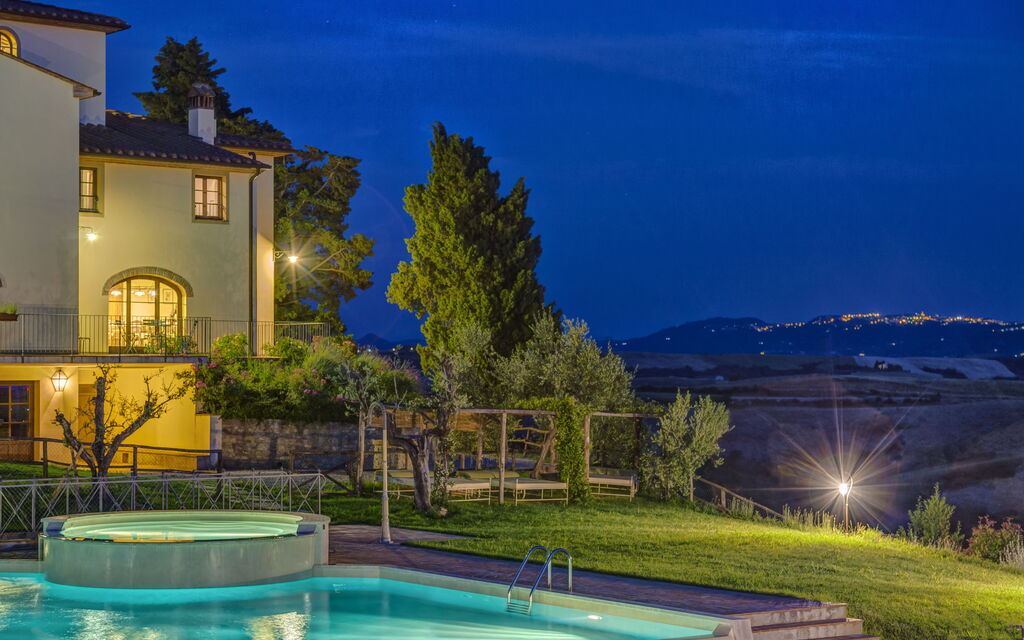
A recent court ruling highlights when a rental activity may no longer be considered “non-business” and what that means in practice.
In recent years, many property owners in Tuscany have turned to non-entrepreneurial short-term rentals as a simple way to generate income from their homes.A flexible solution, often perceived as straightforward and easy to manage. However, the line between “private” activity and business activity has become much thinner than it may seem. A recent ruling from the Florence Tax Court brings this issue back into focus.The Florence case and what it means for property ownersThe court examined the case of a property owner who had been renting out a property continuously for over seven years (sentenza n. 148 del 02/03/2026). What mattered was not how the activity had been formally defined, but how it was actually carried out. In this case, the number of bookings was particularly high, the property was consistently on the market, and most importantly, the rental income represented the owner’s main source of revenue. Taken together, these elements led the court to conclude that the activity was being conducted on a regular, organized, and ongoing basis — effectively qualifying it as a business. As a result, the flat tax regime was denied.In simple terms: defining yourself as a private individual is not enough. This ruling highlights a key point: substance matters more than form. Even with a single property, a continuous flow of guests, frequent bookings, and an increasingly structured management approach — including cleaning, guest communication, and platform management — may point toward a business activity. At the same time, regulations have become stricter: today, managing more than two properties automatically places you in the business category. But as this case shows, the threshold is not the only factor.Legal Note: A Warning Signal, Not a Final VerdictIt is important to clarify that the Florence ruling is a first-instance judgment. This means the taxpayer still has the opportunity to appeal and potentially take the case to the Supreme Court. However, this ruling sets a significant precedent: tax judges are increasingly focusing on the "economic substance" of short-term rentals, looking past the formal labels of "private" or "non-professional" host.Why it’s important to pay attention.The real risk is that these situations often come to light after several years, once the activity is already well established.And when they do, the consequences can be significant: retroactive tax assessments, loss of tax benefits, penalties, and administrative obligations.If an activity is reclassified as a business, the financial damage goes far beyond losing the preferential tax rate. The owner could face:VAT Recovery : The VAT that was never applied to previous rental income becomes a direct out-of-pocket cost for the owner.INPS Social Security Contributions: The retroactive obligation to register with the Social Security "Commercianti" fund, requiring the payment of both fixed and percentage-based contributions.Fines for Lack of Invoicing: Heavy penalties for failing to issue formal invoices and neglecting mandatory accounting records.With the full implementation of the CIN (National Identification Code) and the obligation for platforms like Airbnb and Booking.com to share data with the Revenue Agency, "DIY" tax management has become extremely risky. Today, tax authorities use algorithms to cross-reference the number of nights sold with declared income in seconds, making "masked" professional activities easily identifiable.This is not just about operations — it is about protecting your investment over time. Owning a home in Tuscany and renting it out remains a valuable opportunity. But today more than ever, it is not just about doing it — it is about doing it properly. Every home has its own story, and so does the way it is managed. Understanding the right approach from the beginning is what truly makes a difference over time. If you’d like to better understand how to approach your specific situation, we’d be happy to help. Feel free to get in touch at elisa@tuscanhouses.com
Short-term rentals: when do they become a business?: Read More
Lucca Visit Card: the easiest way to explore the city
Friday, March 20, 2026,
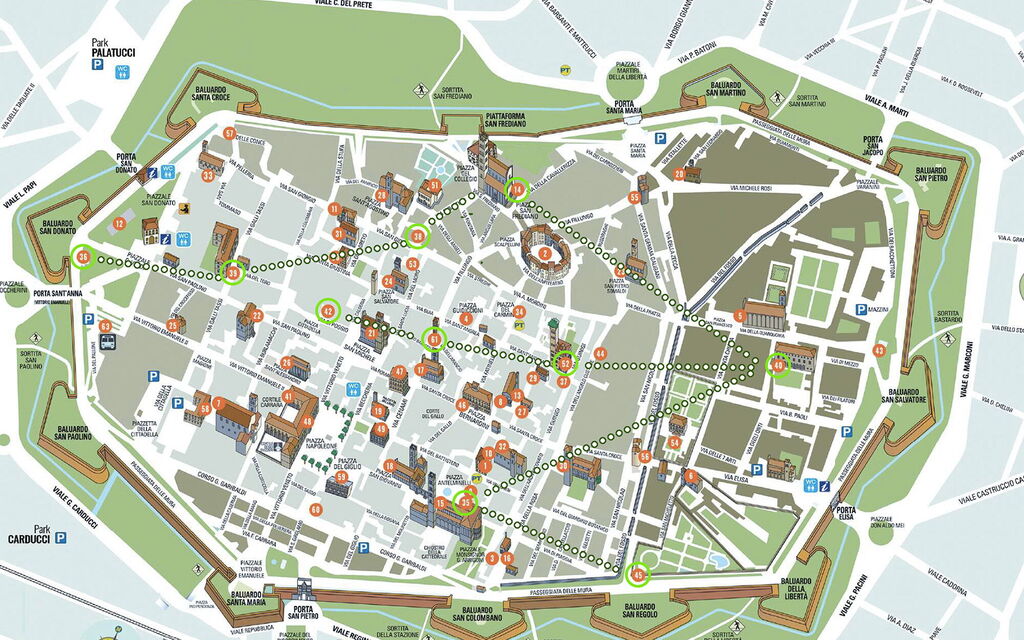
Planning a trip to Lucca but not sure where to start? Here’s a simple tip: begin with the Lucca Visit Card.
Exploring Lucca is easy with the Lucca Visit Card, an all-in-one pass that gives access to the city’s main museums, towers and landmarks. Designed to make your stay easier, is perfect for anyone who wants to explore Lucca’s rich cultural heritage without the hassle of booking each attraction separately. A simple and convenient solution that enhances your overall experience while giving you access to the city’s key highlights.A journey through history, art and beautyWith the Visit Card, you can access some of Lucca’s most iconic sites, each with its own story to tell.You can begin your walk at the Puccini Museum – Casa Natale, the birthplace of the renowned composer Giacomo Puccini, and then continue towards the remarkable Torre Guinigi, famous for its rooftop garden with oak trees.Between a history-filled museum and a panoramic tower, it’s worth slowing down and stopping at Taddeucci to taste the traditional Buccellato, fragrant with anise and raisins, and a small ritual that captures the city’s most authentic soul.Along the way, you’ll also come across the Torre delle Ore, the tallest of the more than 130 towers that once shaped Lucca’s medieval skyline.If you wish to dive deeper into the history of Lucca’s most powerful families, you can extend your route to the Museo Nazionale di Villa Guinigi which, together with the Museo Nazionale di Palazzo Mansi, offers a fascinating glimpse into the city’s noble residences and heritage.Continuing your walk, you’ll reach the Complesso museale ed archeologico della Cattedrale di Lucca, a rich concentration of sacred art and centuries of history.At this point, a peaceful break at the Orto Botanico di Lucca offers a moment of calm, surrounded by greenery in the heart of the city.On the opposite side of the historic center lies the Complesso della Basilica e Campanile di San Frediano, also known for its stunning mosaics.For those interested in ancient history, the walk can end with a visit to the Domus Romana di Lucca, offering a fascinating glimpse into Roman Lucca, before continuing to the Museo Antica Zecca di Lucca, which tells the story of the city’s economic and political past.Along the way, you might also treat yourself to another sweet stop at Caniparoli, a historic chocolate shop where chocolate has been handcrafted with the same passion for over thirty years.The Lucca Visit Card becomes, in this way, a simple and enjoyable way to experience the city, guided by curiosity, beauty, and the pleasure of discovering something new at every step.Lucca is a city to be discovered slowly, one step at a time. Find the home that lets you experience it at your own pace on Tuscanhouses.com.
Lucca Visit Card: the easiest way to explore the city: Read More
A practical and authentic guide to renting out in Tuscany with peace of mind, between hospitality and regulations
Monday, February 9, 2026,
From family homes to modern short-term rental management: the checklist to rent legally, safely and with genuine local care.
Renting out a home in Tuscany in 2026 means more than welcoming guests — it means managing codes, portals, safety requirements and legal deadlines. This practical checklist guides owners step by step through CIR, CIN, Questura registration, ISTAT reporting and tourist tax obligations.Everything at TuscanHouses started with a family home. At first, renting out seemed simple: a few guests, a warm welcome, handing over the keys.But year after year, I realised how much the world of short-term rentals in Tuscany was changing. What twenty years ago involved very little bureaucracy has now become a regulated sector, shaped by identification codes, official portals, safety requirements and mandatory communications.Over time, renting out stopped being just about “handing over the keys”. It became a real job of management, precision and responsibility.And for me, step by step, it became something more: a vocation.Taking care of your home’s story, helping owners truly enhance their properties, and offering guests an authentic experience between Lucca and its rolling countryside.To rent out safely, legally — and without the stress of penalties — it is essential to understand these obligations clearly.
This guide will walk you through the key steps, one by one.
Before you start: the property must be a legal residence.Before launching a tourist rental, you must verify that the property is officially registered for residential use.
To obtain both the CIR and the CIN, the home must fall under a residential cadastral category, such as:
A/2 – Civil dwellings
A/3 – Economic dwellings
A/7 – Villas and cottages
It is not possible to legally start a short-term rental if the property is registered as:
garages or storage units
agricultural annexes or technical rooms
units without habitability certification (although in some municipalities, compliance of the systems may be sufficient — it is always advisable to check).1. CIR Tuscany: regional registration for tourist rentals
The first mandatory step is obtaining the CIR (Regional Identification Code).
I know, it may feel like a maze of acronyms — but it’s the first step toward peace of mind and stress-free hosting. In Tuscany, registration is completed through the official portal:Open Toscana portal To find the correct service:
enter the Open Toscana platform
search for “Locazioni Turistiche”
select the dedicated registration service
Full cadastral details are required, so it is useful to have an updated property record (visura) or the notarial deed available.
2. Heads up: some municipalities may also require SCIA
Although tourist rentals are not traditional accommodation businesses, some municipalities may still request a SCIA declaration or additional notifications.
To protect yourself:
contact the local SUAP office
request confirmation in writing (email or certified mail)
keep the response on record
3. Safety first: requirements and compliance
Before applying for the national CIN, your home must meet minimum safety standards, including:
Fire extinguishers (at least one per floor or one every 200 sqm)
Certified smoke/gas and carbon monoxide detectors (CO)
During the CIN procedure, owners are normally required to declare that the property complies with current safety regulations. Think of these safety steps as a way to protect guests — but also to protect you. In case of inspection, being prepared makes compliance stress-free.
4. CIN National Code: registration on the BDSR database
After obtaining your CIR and meeting safety requirements, you can request your CIN (National Identification Code) through the official database:
BDSR database (Ministry of Tourism) The CIN must appear on every online listing and must also be displayed externally on the property, as required by law.
5. Alloggiati Web: guest registration with the Police
Every guest must be registered through the official Police system.Before using the portal, the property owner must first complete the initial registration process with the competent local Police Headquarters (Questura), in order to obtain access credentials.
Once enabled, guest details must be submitted through:
Alloggiati Web (Polizia di Stato)Deadlines are strict:
within 24 hours of arrival
within 6 hours for one-night stays
A practical and essential recommendation: always download and store the digital receipts of each submission for at least 5 years. In case of inspections, these receipts are your only legal proof of compliance.6. Monthly tourist statistics reporting (ISTAT)
In addition to Police registration, owners must report tourist flows (arrivals and overnight stays) every month.
This is mandatory even when there are no guests — the so-called “zero month”. It may sound paradoxical, but precision really becomes our best ally — even on the quiet months.
Reporting is done through local statistical platforms, such as:
Ricestat
Mototourist
Turismo5 and others
The municipality will indicate which system applies.
7. Tourist tax: registration and municipal obligations
If required by the local municipality, owners must:
register the property within the municipal tourist tax archives
collect the tourist tax from guestscomplete the periodic declarationspay it according to municipal deadlines Once registered, periodic declarations must be submitted regularly, even with zero guests. Each municipality has its own rules, so it is essential to verify procedures locally.8. Annual declaration (Model 21)
Many municipalities require an annual summary declaration related to the management of tourist tax revenues, often referred to as Model 21. Always verify the exact procedure with the local authorities, as requirements may vary.Tuscany short-term rental checklist
Because in today’s short-term rentals, peace of mind comes from clarity and good order — not guesswork.
Verify cadastral category and compliance (A/2, A/3, A/7)
Obtain CIR via Open Toscana
Check with SUAP if SCIA is required
Install extinguishers and certified detectors
Request CIN via BDSR + external display
Register with Alloggiati Web + save receipts (5 years)
ISTAT reporting: monthly filing (even for zero months)
Tourist tax: registration, payments and declarations
Annual declaration / Model 21 if required
Renting out a home in Tuscany today means managing a constant stream of rules, portals, and deadlines. But it also means taking care of a place with a story.TuscanHouses was born from this: local experience and genuine attention to every property. If you feel your home deserves care that is respectful, precise and human, we can have a quiet chat — no pressure, no rush. And if there isn’t time for a coffee right now, keep one simple recommendation in mind: follow this checklist step by step, keeping every confirmation and registration.Because in short-term rentals, peace of mind comes from clarity and order.
Regulations and municipal procedures may vary. This guide is informative and does not replace professional advice.
This guide will walk you through the key steps, one by one.
Before you start: the property must be a legal residence.Before launching a tourist rental, you must verify that the property is officially registered for residential use.
To obtain both the CIR and the CIN, the home must fall under a residential cadastral category, such as:
A/2 – Civil dwellings
A/3 – Economic dwellings
A/7 – Villas and cottages
It is not possible to legally start a short-term rental if the property is registered as:
garages or storage units
agricultural annexes or technical rooms
units without habitability certification (although in some municipalities, compliance of the systems may be sufficient — it is always advisable to check).1. CIR Tuscany: regional registration for tourist rentals
The first mandatory step is obtaining the CIR (Regional Identification Code).
I know, it may feel like a maze of acronyms — but it’s the first step toward peace of mind and stress-free hosting. In Tuscany, registration is completed through the official portal:Open Toscana portal To find the correct service:
enter the Open Toscana platform
search for “Locazioni Turistiche”
select the dedicated registration service
Full cadastral details are required, so it is useful to have an updated property record (visura) or the notarial deed available.
2. Heads up: some municipalities may also require SCIA
Although tourist rentals are not traditional accommodation businesses, some municipalities may still request a SCIA declaration or additional notifications.
To protect yourself:
contact the local SUAP office
request confirmation in writing (email or certified mail)
keep the response on record
3. Safety first: requirements and compliance
Before applying for the national CIN, your home must meet minimum safety standards, including:
Fire extinguishers (at least one per floor or one every 200 sqm)
Certified smoke/gas and carbon monoxide detectors (CO)
During the CIN procedure, owners are normally required to declare that the property complies with current safety regulations. Think of these safety steps as a way to protect guests — but also to protect you. In case of inspection, being prepared makes compliance stress-free.
4. CIN National Code: registration on the BDSR database
After obtaining your CIR and meeting safety requirements, you can request your CIN (National Identification Code) through the official database:
BDSR database (Ministry of Tourism) The CIN must appear on every online listing and must also be displayed externally on the property, as required by law.
5. Alloggiati Web: guest registration with the Police
Every guest must be registered through the official Police system.Before using the portal, the property owner must first complete the initial registration process with the competent local Police Headquarters (Questura), in order to obtain access credentials.
Once enabled, guest details must be submitted through:
Alloggiati Web (Polizia di Stato)Deadlines are strict:
within 24 hours of arrival
within 6 hours for one-night stays
A practical and essential recommendation: always download and store the digital receipts of each submission for at least 5 years. In case of inspections, these receipts are your only legal proof of compliance.6. Monthly tourist statistics reporting (ISTAT)
In addition to Police registration, owners must report tourist flows (arrivals and overnight stays) every month.
This is mandatory even when there are no guests — the so-called “zero month”. It may sound paradoxical, but precision really becomes our best ally — even on the quiet months.
Reporting is done through local statistical platforms, such as:
Ricestat
Mototourist
Turismo5 and others
The municipality will indicate which system applies.
7. Tourist tax: registration and municipal obligations
If required by the local municipality, owners must:
register the property within the municipal tourist tax archives
collect the tourist tax from guestscomplete the periodic declarationspay it according to municipal deadlines Once registered, periodic declarations must be submitted regularly, even with zero guests. Each municipality has its own rules, so it is essential to verify procedures locally.8. Annual declaration (Model 21)
Many municipalities require an annual summary declaration related to the management of tourist tax revenues, often referred to as Model 21. Always verify the exact procedure with the local authorities, as requirements may vary.Tuscany short-term rental checklist
Because in today’s short-term rentals, peace of mind comes from clarity and good order — not guesswork.
Verify cadastral category and compliance (A/2, A/3, A/7)
Obtain CIR via Open Toscana
Check with SUAP if SCIA is required
Install extinguishers and certified detectors
Request CIN via BDSR + external display
Register with Alloggiati Web + save receipts (5 years)
ISTAT reporting: monthly filing (even for zero months)
Tourist tax: registration, payments and declarations
Annual declaration / Model 21 if required
Renting out a home in Tuscany today means managing a constant stream of rules, portals, and deadlines. But it also means taking care of a place with a story.TuscanHouses was born from this: local experience and genuine attention to every property. If you feel your home deserves care that is respectful, precise and human, we can have a quiet chat — no pressure, no rush. And if there isn’t time for a coffee right now, keep one simple recommendation in mind: follow this checklist step by step, keeping every confirmation and registration.Because in short-term rentals, peace of mind comes from clarity and order.
Regulations and municipal procedures may vary. This guide is informative and does not replace professional advice.