Via Francigena: An Invisible Thread from the Sea to Inland Tuscany
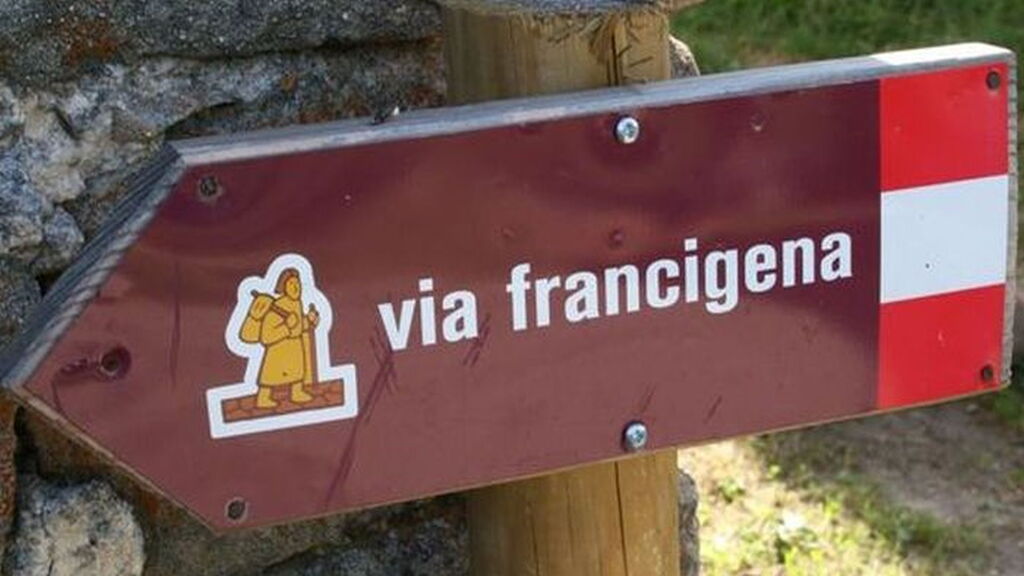
A journey through history and timeless landscapes: the Via Francigena crosses Tuscany from Versilia to Lucca, inspiring a refined and authentic way of travelling.
Tuscany is a story of travel — of history and timeless landscapes. In truth, it is a thousand stories.
One of the most fascinating is the Via Francigena, the ancient pilgrimage route linking Canterbury to Rome, crossing Tuscany from north to south through rolling hills that seem to lean gently toward the sea.
For many years, this path faded into the background. Locals would sometimes say, “The Francigena used to pass through here” as if it belonged to another era, with no more pilgrims and no more footsteps pressing into its trails.
Then the revival of the Camino de Santiago brought renewed interest in Europe’s great pilgrimage routes. Slowly, the Via Francigena came back to life. Today, meeting walkers with backpacks and worn boots along its Tuscan stretches is no longer unusual.
Of the roughly 1,000 kilometres of the Italian route, more than a third lies in Tuscany — a land that has always welcomed travellers. Not medieval pilgrims anymore, perhaps, but conscious explorers seeking authenticity and a meaningful connection with the land.
So let us lace up our walking shoes and follow the Tuscan stretch together.
You don’t need to be a pilgrim, only willing to slow down. Even for a few hours, setting out from the house you’ve chosen as your base, and returning in the evening with the feeling of having stepped through history.
Between Sea and Hills
After crossing into Tuscany at Pontremoli, the route unfolds through medieval villages and wooded paths, skirting the coast near the dramatic Apuan Alps and the elegant Versilia shoreline.
The sea is never far away. Even when unseen, it lingers in the air, in the light, in the way the hills suddenly open toward the horizon.
The path leads through Camaiore and its ancient abbey of San Pietro, welcoming travellers since the 7th century, before climbing toward Montemagno and descending toward Lucca. Along the way, countless small hamlets invite you to wander slowly beneath trees whose branches weave light into a quiet kaleidoscope.
Entering Lucca after hours of walking changes your rhythm. Its Renaissance walls embrace you; the noise softens. You understand why travellers have paused here for centuries.
From Lucca, the Via Francigena unfolds through a Tuscany of medieval towers, rolling hills and villages suspended in time: San Miniato, San Gimignano, Monteriggioni.
Then comes Siena, beloved around the world, the spiritual heart of the journey.
Beyond Siena, the route winds into the timeless landscapes of the Val d’Orcia, reaching San Quirico d'Orcia and Radicofani, Tuscany’s last sentinel before the path continues into Lazio.
In Praise of Slowness
The Via Francigena speaks of slowness. Of attention. Of respect.
It is powerful on foot, yet equally meaningful when explored at your own pace from a private villa or countryside home. Each day, you can discover a new stretch, returning in the evening not exhausted, but enriched.
Because Tuscany’s beauty never fades yet it reveals itself fully only when you resist the urge to rush.
What matters is...
As T. S. Eliot wrote, what matters is not the arrival, but the journey. Do not simply pass through places. Dwell in them.
Choosing a home in Tuscany means stepping into a thousand-year-old story — not as a spectator, but as part of it.
If you dream of discovering the Via Francigena without giving up comfort and privacy, explore our curated collection and find your perfect starting point.