Pistoia Events 2026: Festivals, Traditions and Summer Experiences
Monday, June 15, 2026,
Music festivals, medieval celebrations, wine events and authentic Tuscan traditions in the heart of Tuscany
Events and Traditions between Pistoia and Montalbano 2026
Music festivals, medieval celebrations, local traditions and unforgettable summer events in the heart of Tuscany
If you are spending your holiday in the area between Pistoia, Lamporecchio, Vinci, Serravalle Pistoiese and the rolling hills of Montalbano, summer offers far more than beautiful landscapes and charming villages.
From international music festivals and medieval reenactments to local food celebrations and wine events, this corner of Tuscany hosts some of the region's most fascinating summer experiences.
To discover why local festivals play such an important role in Tuscan culture, we also recommend reading our complete guide:
Tuscany Village Festivals 2026: The Tuscanhouses Guide to Experiencing Tuscany Like a LocalJune 2026Cerbaia in Festa
Cerbaia, Lamporecchio
June 11 – 21, 2026
One of the most popular community festivals in the Montalbano area.
Each evening features live music, theatre performances, dancing and traditional Tuscan dishes. Visitors can enjoy local specialties such as tripe, wild boar stew, cacciucco fish soup and many other regional recipes.
A wonderful opportunity to experience authentic village life.Bavarian Festival of PorcianoPorciano, Lamporecchio
June 19 – 21, 2026
A unique blend of Tuscany and Bavaria.
Expect beer, music, dumplings, roasted pork knuckle and lively summer evenings in the beautiful countryside near Lamporecchio.
One of the most original events of the season.Tuscan DOP Bread FestivalBorgo a Buggiano
June 11 – July 5, 2026
For nearly a month, the Colombai Park hosts evenings dedicated to traditional Tuscan cuisine, local products and live entertainment.
Grilled meats, local bread, music and outdoor dining create a welcoming atmosphere for visitors of all ages.July 2026Pistoia Blues Festival
Pistoia
July 2 – 10, 2026
One of Italy's most prestigious music festivals.
For more than forty years, the Pistoia Blues Festival has welcomed internationally renowned artists and thousands of music lovers to the historic centre of Pistoia.
A must for anyone visiting Tuscany in early July.Unicorn FestivalVinci
July 10 – 12, 2026
Often described as Italy's largest fantasy festival, the Unicorn Festival transforms Vinci into a magical world of knights, elves, fantasy characters, costumes and live performances.
A fantastic event for families, fantasy enthusiasts and curious travellers alike. Jacopean CelebrationsPistoia
Throughout July 2026
The city of Pistoia dedicates the month of July to its patron saint, Saint James (San Jacopo).
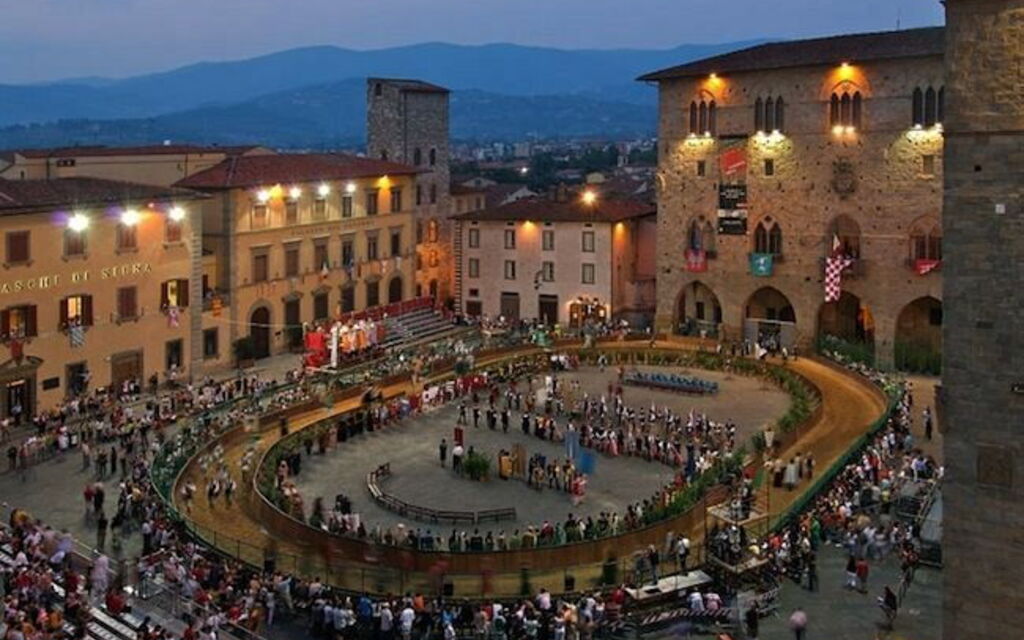
Historical parades, flag throwers, religious ceremonies and traditional events fill the streets and squares, bringing centuries of local history to life.Giostra dell'OrsoPiazza del Duomo, Pistoia
July 25, 2026
The most important historical event of the Pistoia summer.
On the feast day of Saint James, the city's four historic districts compete in an exciting horse-riding tournament held in the magnificent Piazza del Duomo.
Armed with lances, riders aim at a wooden bear-shaped target known as the "Micco", the heraldic symbol of Pistoia.
An extraordinary spectacle that attracts thousands of spectators every year and offers visitors a unique glimpse into Pistoia's medieval heritage.August 2026Brigidino Festival
Lamporecchio
July 31 – August 5, 2026
Dedicated to the famous Brigidini of Lamporecchio, one of Tuscany's best-loved traditional sweets.
These delicate anise-flavoured wafers have become a symbol of the area and are enjoyed by visitors from across the region. Calici di StelleVinci
August 10, 2026
A magical evening dedicated to wine, local culture and the summer stars.
Wine tastings, special events and late openings of attractions linked to Leonardo da Vinci make this one of the most romantic nights of the Tuscan summer, making the event even more memorable. Serravalle in the Middle AgesSerravalle Pistoiese
August 17 – 19, 2026
For a few days every summer, Serravalle Pistoiese travels back in time.
The village fills with medieval merchants, knights, musicians, craftsmen and performers, creating one of Tuscany's most fascinating historical reenactments.
Highlights include the Mercenaries' Palio and the Archers' Palio. Feast of Saint BartholomewPistoia
August 24, 2026
One of Pistoia's most cherished traditions.
The celebration is particularly associated with children and families and attracts thousands of visitors every year for its religious ceremonies and community events. Worth the Trip: The Palio of SienaDatesJuly 2, 2026
August 16, 2026
If you happen to be in Tuscany on either of these dates, the Palio of Siena is an experience not to be missed.
This world-famous horse race transforms Piazza del Campo into one of the most spectacular historical events in Italy.Where to Stay to Explore Pistoia and MontalbanoMany of the events featured in this guide are located just a short drive from Tuscanhouses properties.
Some of our most convenient villas and holiday homes for exploring the area include:
Villa Alessandra
Villa De FioriCasa al VentoBecause the most memorable experiences are often the ones that locals recommend.Have You Found Your Tuscan Retreat Yet?The music fades.The medieval banners are folded away.The village squares slowly return to their peaceful rhythm.But the memories of these summer celebrations stay with you forever.Discover our carefully selected villas and holiday homes near Pistoia and experience Tuscany beyond the guidebooks.For updated recommendations and local tips during your stay, feel free to contact our team.Many of the events featured in this guide are known mainly by locals, and we are always happy to share our favourite recommendations.Explore Tuscanhouses PropertiesYour next Tuscan story could begin right here.
Music festivals, medieval celebrations, local traditions and unforgettable summer events in the heart of Tuscany
If you are spending your holiday in the area between Pistoia, Lamporecchio, Vinci, Serravalle Pistoiese and the rolling hills of Montalbano, summer offers far more than beautiful landscapes and charming villages.
From international music festivals and medieval reenactments to local food celebrations and wine events, this corner of Tuscany hosts some of the region's most fascinating summer experiences.
To discover why local festivals play such an important role in Tuscan culture, we also recommend reading our complete guide:
Tuscany Village Festivals 2026: The Tuscanhouses Guide to Experiencing Tuscany Like a LocalJune 2026Cerbaia in Festa
Cerbaia, Lamporecchio
June 11 – 21, 2026
One of the most popular community festivals in the Montalbano area.
Each evening features live music, theatre performances, dancing and traditional Tuscan dishes. Visitors can enjoy local specialties such as tripe, wild boar stew, cacciucco fish soup and many other regional recipes.
A wonderful opportunity to experience authentic village life.Bavarian Festival of PorcianoPorciano, Lamporecchio
June 19 – 21, 2026
A unique blend of Tuscany and Bavaria.
Expect beer, music, dumplings, roasted pork knuckle and lively summer evenings in the beautiful countryside near Lamporecchio.
One of the most original events of the season.Tuscan DOP Bread FestivalBorgo a Buggiano
June 11 – July 5, 2026
For nearly a month, the Colombai Park hosts evenings dedicated to traditional Tuscan cuisine, local products and live entertainment.
Grilled meats, local bread, music and outdoor dining create a welcoming atmosphere for visitors of all ages.July 2026Pistoia Blues Festival
Pistoia
July 2 – 10, 2026
One of Italy's most prestigious music festivals.
For more than forty years, the Pistoia Blues Festival has welcomed internationally renowned artists and thousands of music lovers to the historic centre of Pistoia.
A must for anyone visiting Tuscany in early July.Unicorn FestivalVinci
July 10 – 12, 2026
Often described as Italy's largest fantasy festival, the Unicorn Festival transforms Vinci into a magical world of knights, elves, fantasy characters, costumes and live performances.
A fantastic event for families, fantasy enthusiasts and curious travellers alike. Jacopean CelebrationsPistoia
Throughout July 2026
The city of Pistoia dedicates the month of July to its patron saint, Saint James (San Jacopo).
Historical parades, flag throwers, religious ceremonies and traditional events fill the streets and squares, bringing centuries of local history to life.Giostra dell'OrsoPiazza del Duomo, Pistoia
July 25, 2026
The most important historical event of the Pistoia summer.
On the feast day of Saint James, the city's four historic districts compete in an exciting horse-riding tournament held in the magnificent Piazza del Duomo.
Armed with lances, riders aim at a wooden bear-shaped target known as the "Micco", the heraldic symbol of Pistoia.
An extraordinary spectacle that attracts thousands of spectators every year and offers visitors a unique glimpse into Pistoia's medieval heritage.August 2026Brigidino Festival
Lamporecchio
July 31 – August 5, 2026
Dedicated to the famous Brigidini of Lamporecchio, one of Tuscany's best-loved traditional sweets.
These delicate anise-flavoured wafers have become a symbol of the area and are enjoyed by visitors from across the region. Calici di StelleVinci
August 10, 2026
A magical evening dedicated to wine, local culture and the summer stars.
Wine tastings, special events and late openings of attractions linked to Leonardo da Vinci make this one of the most romantic nights of the Tuscan summer, making the event even more memorable. Serravalle in the Middle AgesSerravalle Pistoiese
August 17 – 19, 2026
For a few days every summer, Serravalle Pistoiese travels back in time.
The village fills with medieval merchants, knights, musicians, craftsmen and performers, creating one of Tuscany's most fascinating historical reenactments.
Highlights include the Mercenaries' Palio and the Archers' Palio. Feast of Saint BartholomewPistoia
August 24, 2026
One of Pistoia's most cherished traditions.
The celebration is particularly associated with children and families and attracts thousands of visitors every year for its religious ceremonies and community events. Worth the Trip: The Palio of SienaDatesJuly 2, 2026
August 16, 2026
If you happen to be in Tuscany on either of these dates, the Palio of Siena is an experience not to be missed.
This world-famous horse race transforms Piazza del Campo into one of the most spectacular historical events in Italy.Where to Stay to Explore Pistoia and MontalbanoMany of the events featured in this guide are located just a short drive from Tuscanhouses properties.
Some of our most convenient villas and holiday homes for exploring the area include:
Villa Alessandra
Villa De FioriCasa al VentoBecause the most memorable experiences are often the ones that locals recommend.Have You Found Your Tuscan Retreat Yet?The music fades.The medieval banners are folded away.The village squares slowly return to their peaceful rhythm.But the memories of these summer celebrations stay with you forever.Discover our carefully selected villas and holiday homes near Pistoia and experience Tuscany beyond the guidebooks.For updated recommendations and local tips during your stay, feel free to contact our team.Many of the events featured in this guide are known mainly by locals, and we are always happy to share our favourite recommendations.Explore Tuscanhouses PropertiesYour next Tuscan story could begin right here.
Pistoia Events 2026: Festivals, Traditions and Summer Experiences: Read More
Tuscany Village Festivals 2026: The Tuscanhouses Guide to Experiencing Tuscany Like a Local
Thursday, June 11, 2026,
When Summer Evenings Were Spent Together: Sagre Toscane
Much More Than Just Dinner
When people think of Tuscany, they immediately picture rolling hills, vineyards, medieval villages and historic cities.
All true.
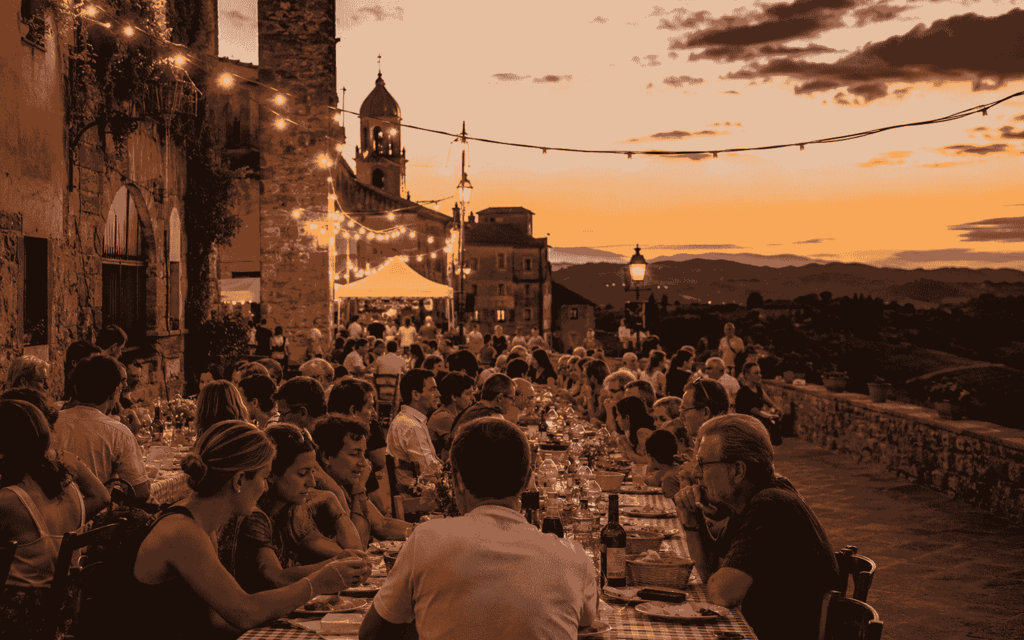
But some of the most authentic experiences you can have during a holiday in Tuscany cannot be found in museums, monuments or travel guides. There is another side of Tuscany that rarely appears in tourist brochures. A Tuscany made of long outdoor tables, laughter filling village squares, children playing until late in the evening, and delicious aromas drifting from temporary kitchens set up beneath large tents.This is the Tuscany of the sagre.
For many international visitors, the concept of a sagra is difficult to translate. It is not a festival, it is not a market, and it is not simply an open-air restaurant. It is something much simpler and much more authentic. It is a community coming together to celebrate a tradition, a family recipe, a local product, or simply the pleasure of being together. And often, without even realizing it, our guests return home remembering these evenings as the most authentic moments of their Tuscan holiday.“Andare a Veglia”: When Summer Evenings Were Spent TogetherTo truly understand the soul of a Tuscan village festival, we need to take a small step back in time.
Long before television, the internet and social media, there was a tradition in the Tuscan countryside called andare a veglia.
After dinner, friends, relatives and neighbours would gather in farm courtyards, beneath vine-covered pergolas or outside the barns. They would tell stories, discuss local events, laugh together and enjoy the long summer evenings.
It did not take much.
A few chairs. A glass of wine. And the desire to be together.Modern village festivals still preserve something of that spirit.
When you sit at a long communal table next to people you have never met before, when you watch volunteers rushing between tables carrying steaming plates of food, and children playing in the square until late at night, you are experiencing a tradition deeply rooted in Tuscany's rural culture of sharing, hospitality and community.
What to Expect from a Real Tuscan Village FestivalIf you are imagining an elegant restaurant with perfectly set tables and flawless service, a sagra is probably not for you.
Village festivals are simple. Sometimes even a little chaotic.
You may find yourself standing in line at the cashier holding a small paper ticket.
You may wait for your number to be called through a crackling loudspeaker.
You may end up sitting next to a local family that has attended the same festival every summer for the past twenty years.
And that is exactly what makes it special.
You will eat at plastic tables or beneath large temporary tents.
You will smell grilled meats and slow-cooked sauces prepared according to recipes handed down through generations.
You will see mothers, grandmothers, volunteers and local associations working together for months simply to keep a tradition alive.
The food will not be "plated".
It will be plentiful. Generous. Prepared with heart. And it will taste like Sunday lunches, village celebrations and cherished family memories.Where Tuscany Truly Meets Its GuestsVillage festivals are simple, genuine and sometimes delightfully chaotic.
You might place your order at the cashier and wait for a cold beer and a perfectly roasted pork shank to magically appear at your white plastic table.
Or you might find yourself balancing a tray full of paper plates while making room among friends, children and grandparents gathered under a large marquee. There are no fixed rules. Sometimes local teenagers will be serving the tables, running back and forth with a smile, hoping to earn a few euros in tips to buy themselves an ice cream later that evening.
Other times you may find yourself sitting next to a complete stranger who, within minutes, is recommending their favourite restaurant, a hidden beach, or the village they insist you absolutely must visit the following day.
The food will not be perfectly presented. It will be abundant. Prepared by the skilled hands of local cooks, mothers and grandmothers who carefully preserve recipes passed down through generations.Perhaps the service will be a little slow.
Perhaps you will have to wait a few extra minutes.
But nobody seems to be in a hurry.
Because a sagra is not simply a place to eat. It is a place to be together. And for a few hours, you too will become part of that community.Discover the Festivals Near Your VillaTo help you find the most interesting events during your stay, we have created dedicated guides for the main areas where we operate.
Village Festivals of the Lucca Area 2026
Events and Traditions between Pistoia and Montalbano 2026 Village Festivals in Vicopisano, Buti and the Valdera Area 2026 (available shortly)Village Festivals of Versilia 2026 (available shortly)Each guide is regularly updated with dates, events and recommendations gathered directly by the Tuscanhouses team and the owners of our villas. Because the people who live here often know about the most beautiful local celebrations... the ones that never appear in tourist guidebooks.And very often, those are the experiences that become the most treasured memories of a holiday in Tuscany.
Have You Found Your Tuscan Home Yet?The village festivals come to an end. The lights are switched off. The squares slowly grow quiet again. But the memories of those summer evenings stay with you forever. Find the perfect villa, farmhouse or apartment for your next holiday and experience Tuscany the way locals do. Because the most beautiful memories are not only about the places you visit, but also about the place you call home during your stay.Explore Tuscanhouses Properties. Your next Tuscan story could begin right here
When people think of Tuscany, they immediately picture rolling hills, vineyards, medieval villages and historic cities.
All true.
But some of the most authentic experiences you can have during a holiday in Tuscany cannot be found in museums, monuments or travel guides. There is another side of Tuscany that rarely appears in tourist brochures. A Tuscany made of long outdoor tables, laughter filling village squares, children playing until late in the evening, and delicious aromas drifting from temporary kitchens set up beneath large tents.This is the Tuscany of the sagre.
For many international visitors, the concept of a sagra is difficult to translate. It is not a festival, it is not a market, and it is not simply an open-air restaurant. It is something much simpler and much more authentic. It is a community coming together to celebrate a tradition, a family recipe, a local product, or simply the pleasure of being together. And often, without even realizing it, our guests return home remembering these evenings as the most authentic moments of their Tuscan holiday.“Andare a Veglia”: When Summer Evenings Were Spent TogetherTo truly understand the soul of a Tuscan village festival, we need to take a small step back in time.
Long before television, the internet and social media, there was a tradition in the Tuscan countryside called andare a veglia.
After dinner, friends, relatives and neighbours would gather in farm courtyards, beneath vine-covered pergolas or outside the barns. They would tell stories, discuss local events, laugh together and enjoy the long summer evenings.
It did not take much.
A few chairs. A glass of wine. And the desire to be together.Modern village festivals still preserve something of that spirit.
When you sit at a long communal table next to people you have never met before, when you watch volunteers rushing between tables carrying steaming plates of food, and children playing in the square until late at night, you are experiencing a tradition deeply rooted in Tuscany's rural culture of sharing, hospitality and community.
What to Expect from a Real Tuscan Village FestivalIf you are imagining an elegant restaurant with perfectly set tables and flawless service, a sagra is probably not for you.
Village festivals are simple. Sometimes even a little chaotic.
You may find yourself standing in line at the cashier holding a small paper ticket.
You may wait for your number to be called through a crackling loudspeaker.
You may end up sitting next to a local family that has attended the same festival every summer for the past twenty years.
And that is exactly what makes it special.
You will eat at plastic tables or beneath large temporary tents.
You will smell grilled meats and slow-cooked sauces prepared according to recipes handed down through generations.
You will see mothers, grandmothers, volunteers and local associations working together for months simply to keep a tradition alive.
The food will not be "plated".
It will be plentiful. Generous. Prepared with heart. And it will taste like Sunday lunches, village celebrations and cherished family memories.Where Tuscany Truly Meets Its GuestsVillage festivals are simple, genuine and sometimes delightfully chaotic.
You might place your order at the cashier and wait for a cold beer and a perfectly roasted pork shank to magically appear at your white plastic table.
Or you might find yourself balancing a tray full of paper plates while making room among friends, children and grandparents gathered under a large marquee. There are no fixed rules. Sometimes local teenagers will be serving the tables, running back and forth with a smile, hoping to earn a few euros in tips to buy themselves an ice cream later that evening.
Other times you may find yourself sitting next to a complete stranger who, within minutes, is recommending their favourite restaurant, a hidden beach, or the village they insist you absolutely must visit the following day.
The food will not be perfectly presented. It will be abundant. Prepared by the skilled hands of local cooks, mothers and grandmothers who carefully preserve recipes passed down through generations.Perhaps the service will be a little slow.
Perhaps you will have to wait a few extra minutes.
But nobody seems to be in a hurry.
Because a sagra is not simply a place to eat. It is a place to be together. And for a few hours, you too will become part of that community.Discover the Festivals Near Your VillaTo help you find the most interesting events during your stay, we have created dedicated guides for the main areas where we operate.
Village Festivals of the Lucca Area 2026
Events and Traditions between Pistoia and Montalbano 2026 Village Festivals in Vicopisano, Buti and the Valdera Area 2026 (available shortly)Village Festivals of Versilia 2026 (available shortly)Each guide is regularly updated with dates, events and recommendations gathered directly by the Tuscanhouses team and the owners of our villas. Because the people who live here often know about the most beautiful local celebrations... the ones that never appear in tourist guidebooks.And very often, those are the experiences that become the most treasured memories of a holiday in Tuscany.
Have You Found Your Tuscan Home Yet?The village festivals come to an end. The lights are switched off. The squares slowly grow quiet again. But the memories of those summer evenings stay with you forever. Find the perfect villa, farmhouse or apartment for your next holiday and experience Tuscany the way locals do. Because the most beautiful memories are not only about the places you visit, but also about the place you call home during your stay.Explore Tuscanhouses Properties. Your next Tuscan story could begin right here
Lucca: The Best Village Festivals in the Lucca Area 2026
Thursday, June 11, 2026,
Tordelli, traditional desserts, porcini mushrooms and authentic Tuscan traditions
If you are planning a holiday in the province of Lucca during the summer, one of the most authentic experiences we can recommend is attending a traditional village festival, known in Italy as a sagra.
From the hills of Matraia to the villages of the Lucca Plain, summer is filled with food festivals celebrating local recipes, regional products and the simple pleasure of spending time together.
To discover why these events are such an important part of Tuscan culture, we also recommend reading our complete guide:
Tuscany Village Festivals 2026: The Tuscanhouses Guide to Experiencing Tuscany Like a LocalJune 2026Homemade Tordelli FestivalSegromigno in Monte
Dates
• June 2 • June 6
• June 13–14
• June 20–21
• June 27–28
One of the most beloved food festivals in the Lucca area, dedicated to the famous Lucchese tordelli served with traditional meat ragù.
Farinata Festival
Marlia
Dates
• June 6–7
• June 13–14
• June 20–21
• June 27–28
A perfect opportunity to discover one of Lucca’s most traditional desserts, prepared according to recipes passed down through generations.Tagliarino Festival
Paganico
Dates
• June 19–21
• June 26–28
• July 3–5
One of the historic festivals of the Lucca Plain, where handmade tagliarini pasta takes centre stage.
Sweet Olive Festival
Matraia
Dates
• June 26–28
• July 3–5
• July 10–12
Surrounded by olive groves and stunning views over the Lucchese hills, this festival celebrates one of the area's most distinctive olive varieties
Porcini Mushroom and Polenta FestivalMassa MacinaiaDates
• June 27–28
• July 4–5
• July 11–12
• July 18–19
• July 25–26
The aroma of porcini mushrooms, steaming polenta and traditional Tuscan cooking makes this one of the most anticipated events of the summer.Zuppa alla Frantoiana FestivalSegromigno in Piano
Dates
• July 4–5
• July 11–12
• July 18–19
• July 25–26
One of the signature dishes of Lucchese cuisine, prepared with simple ingredients full of flavour and tradition.
San Jacopo Village Festival
Lammari
Dates
• July 4–5
• July 11–12
• July 18–19
• July 25–26
A classic Tuscan village celebration where food, music and community come together during warm summer evenings.
Noah’s Ark Festival
Segromigno in Monte
Dates
• August 1–2
• August 8–9
• August 15–16
• August 22–23
• August 29–30
A much-loved local event featuring traditional food, live entertainment and activities for the whole family.
Don't Miss: Montecarlo Wine FestivalMontecarlo (Lucca)
August 28 – September 8, 2026
Among all the events taking place in the Lucca area, the Montecarlo Wine Festival deserves a special mention.
For more than a week, the beautiful medieval village of Montecarlo becomes the heart of Tuscan wine culture, hosting tastings, food stalls, live music and events dedicated to the region’s excellent wines.
If you are visiting Tuscany between late August and early September, this is undoubtedly one of the most charming events in the entire province.
Opening Hours
• Weekdays: 5:00 PM – Midnight
• Saturdays and Sundays: 12:00 PM – Midnight
Recommended Evenings
• August 31
• September 4
• September 5
• September 6
Where to Stay to Explore the Lucca Area
Many of the festivals featured in this guide are located just a short drive from Tuscanhouses properties.
Some of our most convenient villas and holiday homes for exploring the Lucca countryside include:
• Villa Calliope
• Villa Dell'Angelo
• Il Ruscello di Giava• Sunrise• Villa Alberto• Meriggio Barn• Villa Steffy• Furbina• Casale ValentinoFor updated recommendations and local tips during your stay, feel free to contact our team.
We will be delighted to help you experience Tuscany like a local.
From the hills of Matraia to the villages of the Lucca Plain, summer is filled with food festivals celebrating local recipes, regional products and the simple pleasure of spending time together.
To discover why these events are such an important part of Tuscan culture, we also recommend reading our complete guide:
Tuscany Village Festivals 2026: The Tuscanhouses Guide to Experiencing Tuscany Like a LocalJune 2026Homemade Tordelli FestivalSegromigno in Monte
Dates
• June 2 • June 6
• June 13–14
• June 20–21
• June 27–28
One of the most beloved food festivals in the Lucca area, dedicated to the famous Lucchese tordelli served with traditional meat ragù.
Farinata Festival
Marlia
Dates
• June 6–7
• June 13–14
• June 20–21
• June 27–28
A perfect opportunity to discover one of Lucca’s most traditional desserts, prepared according to recipes passed down through generations.Tagliarino Festival
Paganico
Dates
• June 19–21
• June 26–28
• July 3–5
One of the historic festivals of the Lucca Plain, where handmade tagliarini pasta takes centre stage.
Sweet Olive Festival
Matraia
Dates
• June 26–28
• July 3–5
• July 10–12
Surrounded by olive groves and stunning views over the Lucchese hills, this festival celebrates one of the area's most distinctive olive varieties
Porcini Mushroom and Polenta FestivalMassa MacinaiaDates
• June 27–28
• July 4–5
• July 11–12
• July 18–19
• July 25–26
The aroma of porcini mushrooms, steaming polenta and traditional Tuscan cooking makes this one of the most anticipated events of the summer.Zuppa alla Frantoiana FestivalSegromigno in Piano
Dates
• July 4–5
• July 11–12
• July 18–19
• July 25–26
One of the signature dishes of Lucchese cuisine, prepared with simple ingredients full of flavour and tradition.
San Jacopo Village Festival
Lammari
Dates
• July 4–5
• July 11–12
• July 18–19
• July 25–26
A classic Tuscan village celebration where food, music and community come together during warm summer evenings.
Noah’s Ark Festival
Segromigno in Monte
Dates
• August 1–2
• August 8–9
• August 15–16
• August 22–23
• August 29–30
A much-loved local event featuring traditional food, live entertainment and activities for the whole family.
Don't Miss: Montecarlo Wine FestivalMontecarlo (Lucca)
August 28 – September 8, 2026
Among all the events taking place in the Lucca area, the Montecarlo Wine Festival deserves a special mention.
For more than a week, the beautiful medieval village of Montecarlo becomes the heart of Tuscan wine culture, hosting tastings, food stalls, live music and events dedicated to the region’s excellent wines.
If you are visiting Tuscany between late August and early September, this is undoubtedly one of the most charming events in the entire province.
Opening Hours
• Weekdays: 5:00 PM – Midnight
• Saturdays and Sundays: 12:00 PM – Midnight
Recommended Evenings
• August 31
• September 4
• September 5
• September 6
Where to Stay to Explore the Lucca Area
Many of the festivals featured in this guide are located just a short drive from Tuscanhouses properties.
Some of our most convenient villas and holiday homes for exploring the Lucca countryside include:
• Villa Calliope
• Villa Dell'Angelo
• Il Ruscello di Giava• Sunrise• Villa Alberto• Meriggio Barn• Villa Steffy• Furbina• Casale ValentinoFor updated recommendations and local tips during your stay, feel free to contact our team.
We will be delighted to help you experience Tuscany like a local.
Lucca: The Best Village Festivals in the Lucca Area 2026: Read More